Strength Training
Strength Training After 35: What Changes, What Doesn't, and How to Adapt
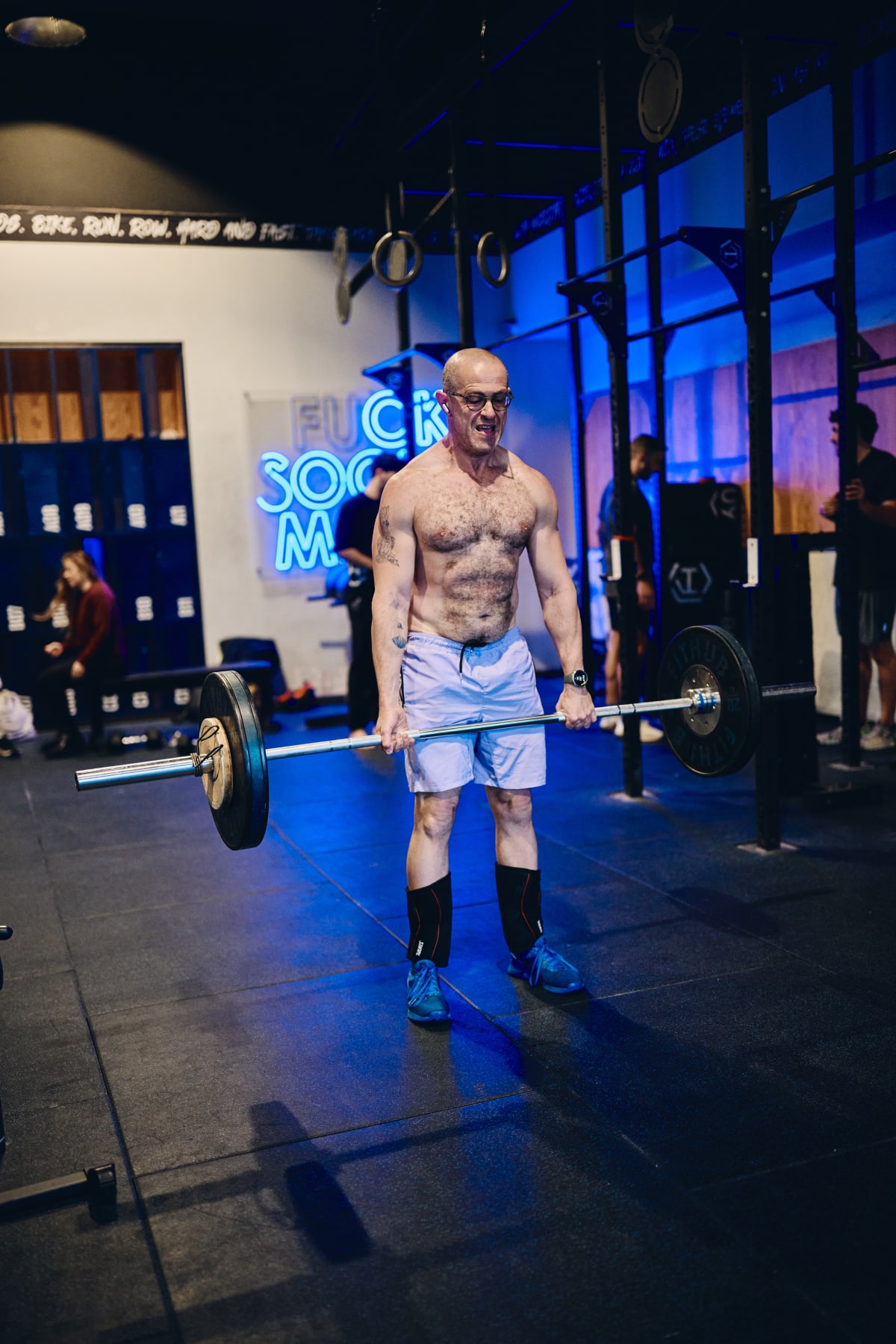
How to keep progressing while respecting recovery: smarter volume, better warmups, and consistency over hero workouts.
If you're over 35 and lifting weights, you've probably noticed something: recovery takes longer, certain movements feel different, and the approach that worked at 25 just doesn't cut it anymore. The good news? Strength training after 35 isn't just possible, done right, it may be the most important thing you do for your health over the next few decades.
What Actually Changes After 35
The changes are real, but most people overestimate their severity. Here is what the research actually shows.
Testosterone and growth hormone levels begin a gradual decline after about age 30, dropping roughly 1 to 2 percent per year in men. Women experience a more pronounced shift around perimenopause, but the decline begins earlier than most expect. These hormones are key drivers of muscle protein synthesis, the process by which your body builds and repairs muscle tissue. A lower hormonal baseline means recovery is slower and adaptation requires a more deliberate training stimulus.
Muscle mass loss, sarcopenia, accelerates if you do not actively prevent it. After 35, the average sedentary adult loses roughly half a pound of muscle per year. By 60, that compounds into over a decade of declining function. The critical word is sedentary. People who train consistently with progressive resistance show dramatically slower rates of muscle loss and, in many cases, continue to gain meaningful muscle well into their 50s and 60s.
Connective tissue, tendons, ligaments, and cartilage, becomes less elastic over time and takes longer to adapt to new training stress. This does not mean you cannot load heavily. It means you need longer ramp-up periods when introducing new movements or significantly higher volumes.
Recovery time between hard sessions extends. A 25-year-old might bounce back from a heavy squat session in 36 to 48 hours. At 40, that same session may require 72 hours before the nervous system is fully recovered. This is not weakness, it is physiology, and it directly informs how you should structure your training week.
What Does Not Change
Adaptation still works. Your body still responds to progressive overload, consistently applying more demand over time, at 35, 45, and 55. The mechanisms are the same. The timeline is slightly longer. Athletes who start strength training in their 40s and 50s make remarkable gains in their first year of consistent work, because they are starting from a lower base and the training stimulus is genuinely new to their system.
Neurological adaptation, your nervous system learning to recruit muscle fibers more efficiently, happens at roughly the same rate regardless of age. This is why most early strength gains in new lifters are neurological rather than structural. At 40, you can still get dramatically stronger in the first 8 to 12 weeks of a new program without any significant change in muscle size. The strength is there; the system just needs to learn how to access it.
The benefits compound the same way. Stronger muscles, more robust connective tissue, higher bone density, better insulin sensitivity, improved hormonal environment, all of these outcomes are available to you through consistent strength training at 35, 45, and beyond. The research on this point is consistent and unambiguous.
How to Train Smarter After 35
The adjustments are in the details, not the fundamentals. Here is what actually needs to change.
Extend Your Warm-Up
A 20-year-old can do a few air squats and get under a barbell. After 35, your joints and connective tissue need more preparation time before heavy loading. A proper warm-up for a strength session should include general cardiovascular elevation, mobility work specific to the joints you are loading, and a progressive ramp-up of the movement itself, starting light and building toward working weight over multiple sets. Budget 15 to 20 minutes before your first working set. This is not wasted time, it is injury prevention and performance optimization combined.
Manage Volume More Carefully
More sets is not always better, and this is truer after 35 than before. A common mistake is adding volume without accounting for longer recovery requirements. If you train a movement pattern twice per week with high volume per session, you may never fully recover between sessions, which means you are accumulating fatigue without accumulating the adaptation you are training for.
A more effective approach: train each major movement pattern two to three times per week with moderate volume per session, and treat recovery as a deliberate part of the program rather than an afterthought. Intensity, how close you are to your true maximum on a given set, matters more than total set count at this stage.
Prioritize Compound Movements
The squat, deadlift, press, and row families deliver the highest return on training investment at any age. After 35, when recovery resources are finite, spending them on movements that develop strength across multiple joints simultaneously is the correct call. Isolation work has its place, particularly for addressing weak points or building joint stability, but it should not crowd out the compound lifts that build the foundation everything else rests on.
Sleep Is Non-Negotiable
Adaptation happens during recovery, not during training. The session is the stimulus; sleep is where the adaptation occurs. After 35, the quality of your sleep has a more direct impact on your training outcomes than it did in your 20s. Growth hormone is released primarily during deep sleep. If you are averaging six hours a night, you are capping your recovery ceiling regardless of how well you eat or how intelligently you program. Seven to nine hours is the target, not as a guideline, but as a training variable.
Protein Intake Needs to Go Up, Not Down
Muscle protein synthesis becomes less efficient after 35, meaning your body needs a stronger dietary stimulus to trigger the same level of muscle-building response. Research suggests that older athletes benefit from slightly higher per-meal protein doses, 40 grams or more per meal rather than the 20 to 25 grams that is sufficient for younger lifters. Total daily intake of 0.7 to 1 gram per pound of bodyweight remains the practical target, and hitting it consistently matters more than optimizing any other nutritional variable.
Respect the Signals Your Body Sends
Soreness that lingers more than 72 hours, persistent joint discomfort, declining performance across multiple sessions in a row, these are signals that recovery is lagging behind training demand. At 25, you could often push through these signals without significant consequence. At 40, they are more reliable indicators of a genuine imbalance. Learning to distinguish productive discomfort from signals that warrant adjustment is a skill that develops over time, and one of the most valuable things a good coach can help you build.
The Longer View
The athletes who train best in their 40s and 50s are not the ones who did the most volume in their 30s. They are the ones who trained consistently, managed recovery intelligently, and avoided the serious injuries that force long layoffs. Longevity in strength training is not about having a perfect program, it is about staying in the game long enough to accumulate years of adaptation.
At FitHub CrossFit REP, we work with athletes at every stage of that process. Whether you are coming back to training after a decade away, making the shift from high-volume work to smarter programming, or building a foundation that carries you through the next 30 years, the coaching, the programming, and the community here are built for exactly that. Come in and let us talk about where you are and what the next phase looks like.
Related
Similar Posts
How to Keep Training on GLP-1: A CrossFit Guide for Austin Athletes
Taking GLP-1 medications like Ozempic or Wegovy? Discover how Austin CrossFit athletes can keep training safely, preserve muscle, and maximize results on GLP-1s.
Gym Shopping in Austin: What to Ask Before You Sign Anything
Joining a gym is a significant commitment of time and money. Here is a practical framework for evaluating your options in Austin before you sign up.